Are There Sharks At Tangalooma Wrecks?
What the official Tangalooma page and Queensland authorities actually say about marine life at the Tangalooma Wrecks, what wobbegongs are, and which jet ski tours go near Moreton Island.
No official source confirms or denies the presence of sharks at the Tangalooma Wrecks. The Tangalooma Island Resort page for the wrecks says the site holds over 100 species of fish and that dolphins, wobbegongs and dugongs are sometimes seen, and it warns the site is unpatrolled with a strong current between the wrecks and the beach when the tide runs. It makes no other statement about sharks. Queensland Parks separately names grey nurse sharks among the wider marine park's wildlife. Neither page states or rules out a risk at the wrecks, so the honest answer is that no shark information is published for the site; ask a tour operator or the resort directly.
In Short
No official source confirms or denies sharks at the Tangalooma Wrecks. The resort's page lists wobbegongs among species sometimes seen there and warns the beach is unpatrolled with a strong tidal current. Queensland Parks names grey nurse sharks in the wider Moreton Bay Marine Park, though not at the wrecks specifically. Anyone concerned should ask the resort or a tour operator directly.
Are There Sharks At Tangalooma Wrecks?
The only shark-adjacent fact available for the Tangalooma Wrecks is the resort's own mention of wobbegongs. Visitors should therefore treat any shark question here as one the official record simply does not answer with a sighting or warning. The Tangalooma Island Resort page for the wrecks says the site has "over 100 species of fish", and sometimes dolphins, wobbegongs and dugongs, with coral "starting to form". Beyond that line, the page's safety notes concern the strong current between the wrecks and the beach when the tide runs, the unpatrolled beach, and "a large number of inexperienced boats and jet skis" passing between the wrecks and the beachfront. No source published for the site states that sharks are present, absent, common or rare. That gap is the answer: it is not stated, and anyone with a specific concern should ask the resort or a tour operator before swimming or snorkelling there.
That is an unsatisfying answer for a page titled with the question, so it is worth being precise about why nothing more can honestly be said. Shark behaviour at any specific site is exactly the kind of claim a travel article should never invent in either direction. Writing "yes, sharks are common at the wrecks" would invent a risk no official source states. Writing "no, the wrecks are shark free" would invent an assurance no official source gives either. Both would be dishonest, and both could change a real decision about whether to swim there.
What can be said, with attribution, is this. Queensland Parks, in its page on Moreton Bay Marine Park's wildlife, names humpback whales, grey nurse sharks, marine turtles and dolphins among the park's animals. That is a statement about the marine park as a whole, which spans a very large area of bay and islands, not about the wrecks specifically. The marine park regulations also set marine mammal approach distances that apply to vessels including jet skis, though the specific jet ski distances are not on the parks page read for this article.
The practical reading for a visitor: treat the wrecks the way the resort describes them, an unpatrolled site with a tidal current, and direct any shark question to the resort or to an operator running on the bay. The rest of this article sets out the full official picture, what a wobbegong actually is, the rules that govern jet skis in the marine park, and the Brisbane tours that get closest to Moreton Island.
What Are The Tangalooma Wrecks And Why Are They There?
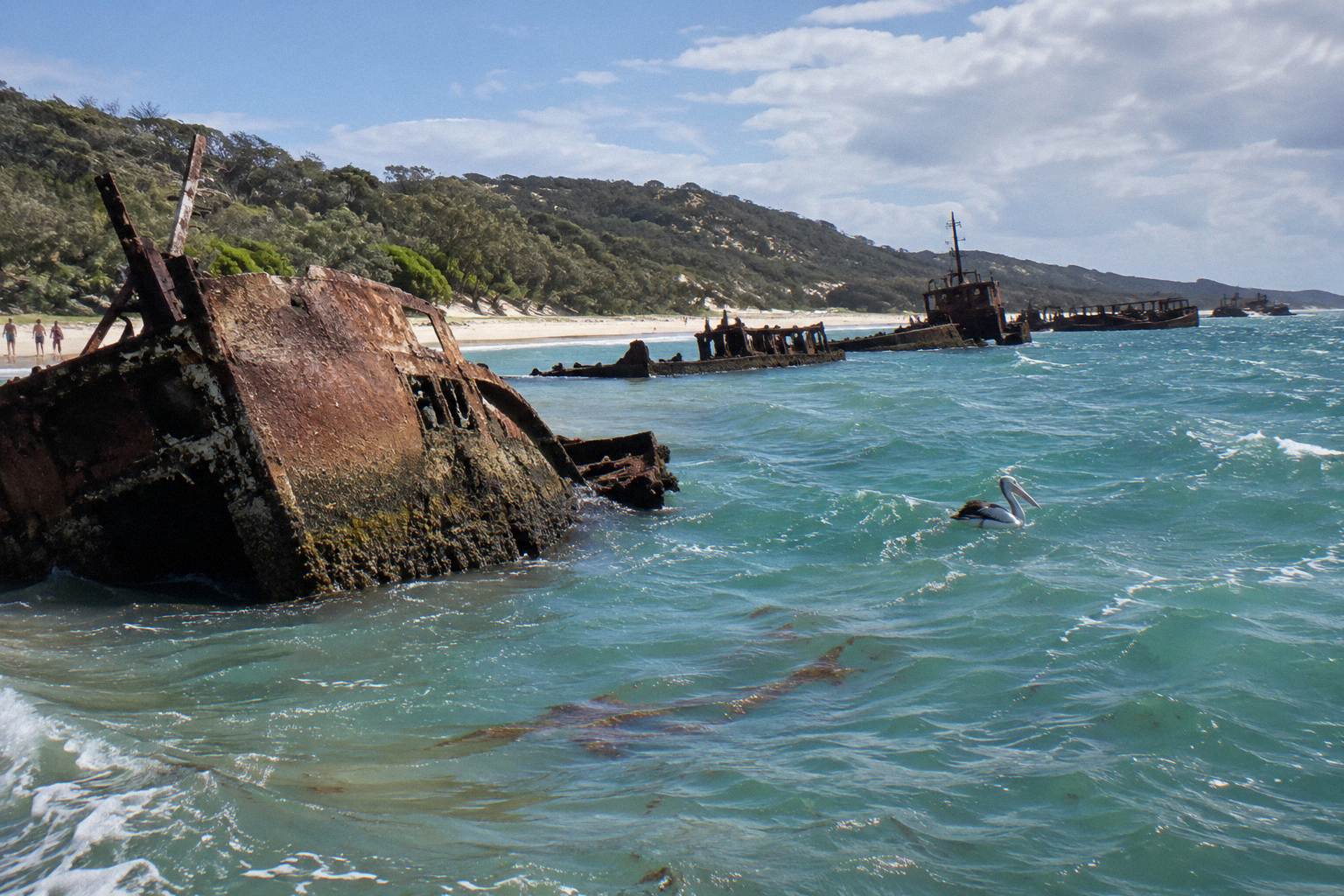
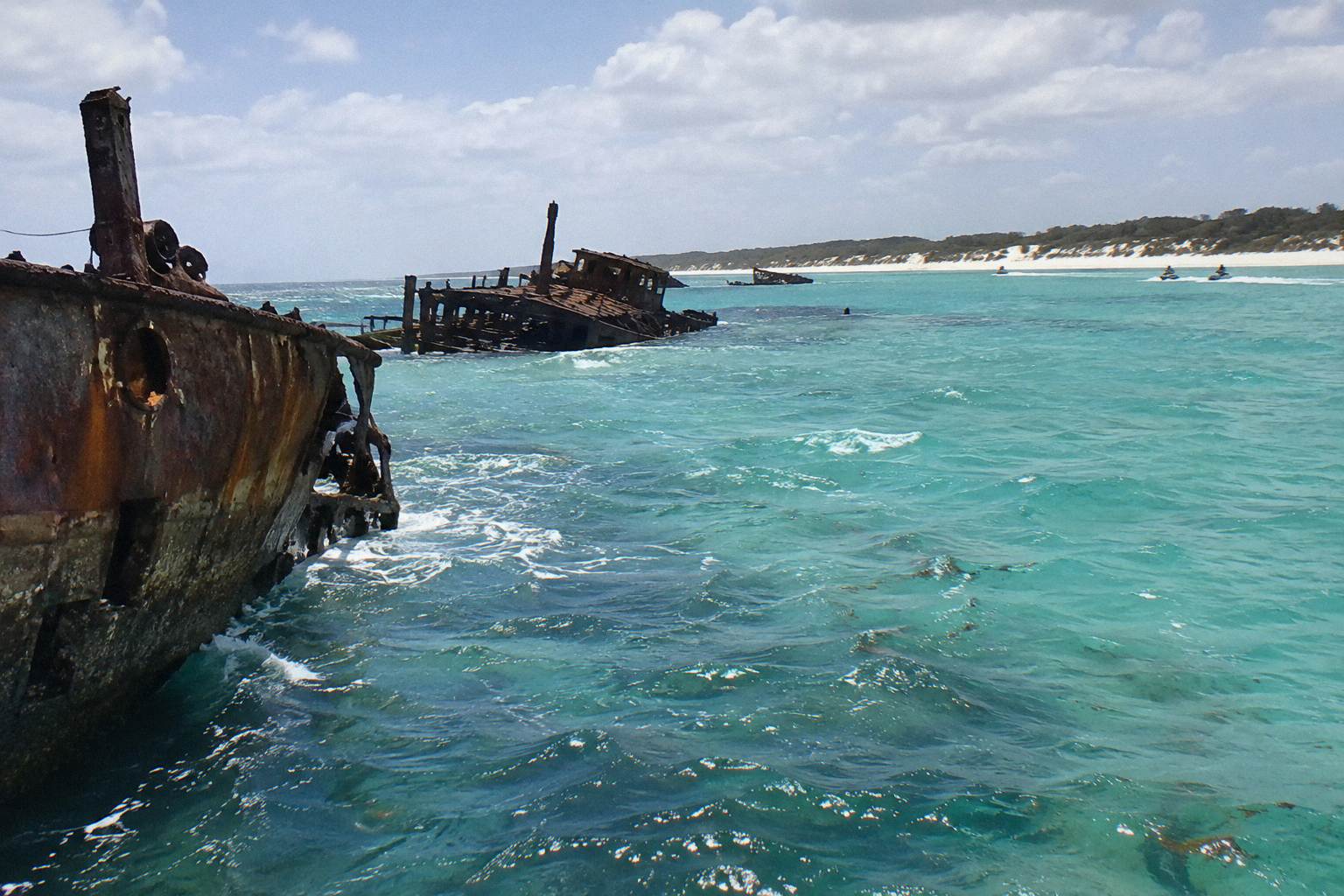
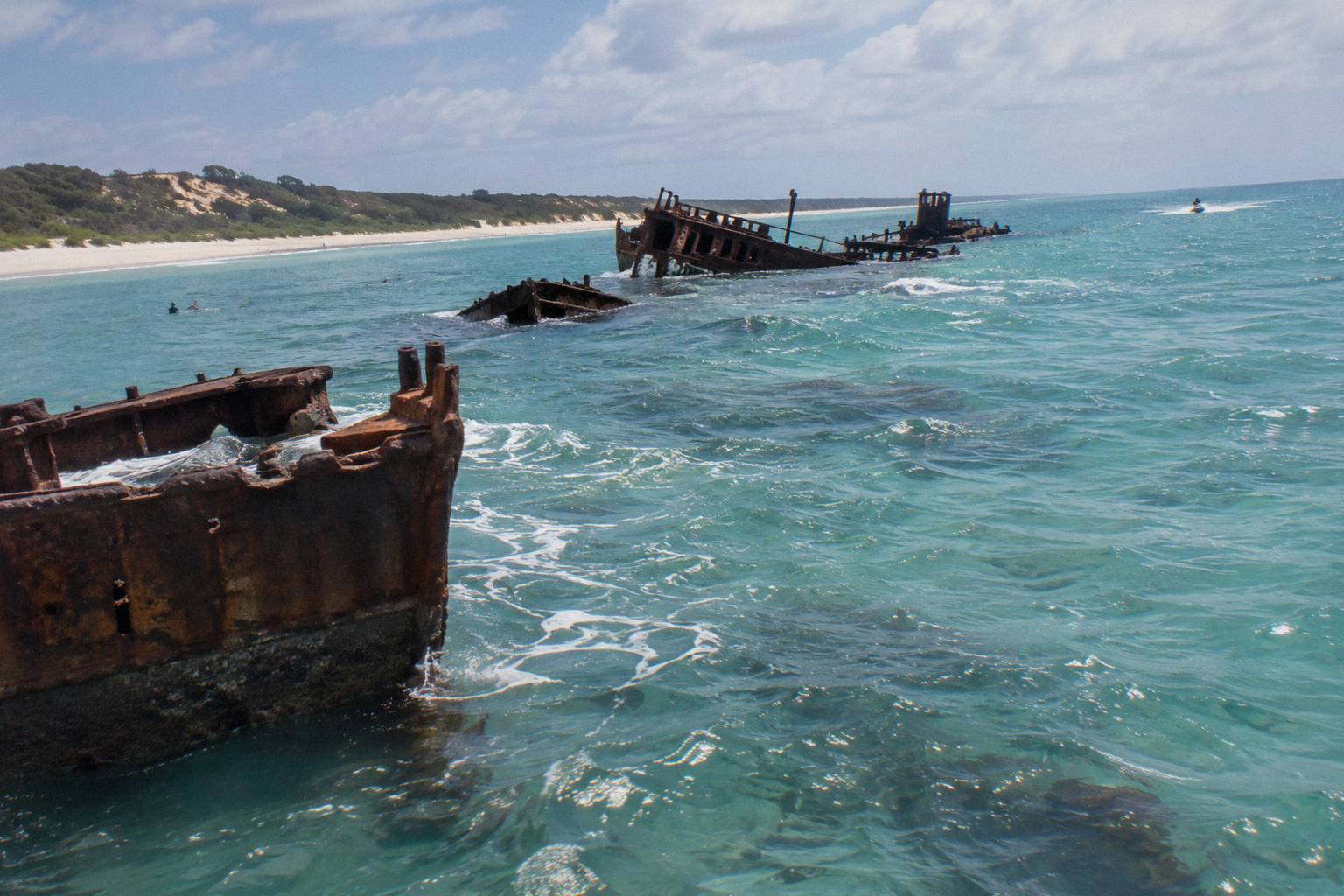
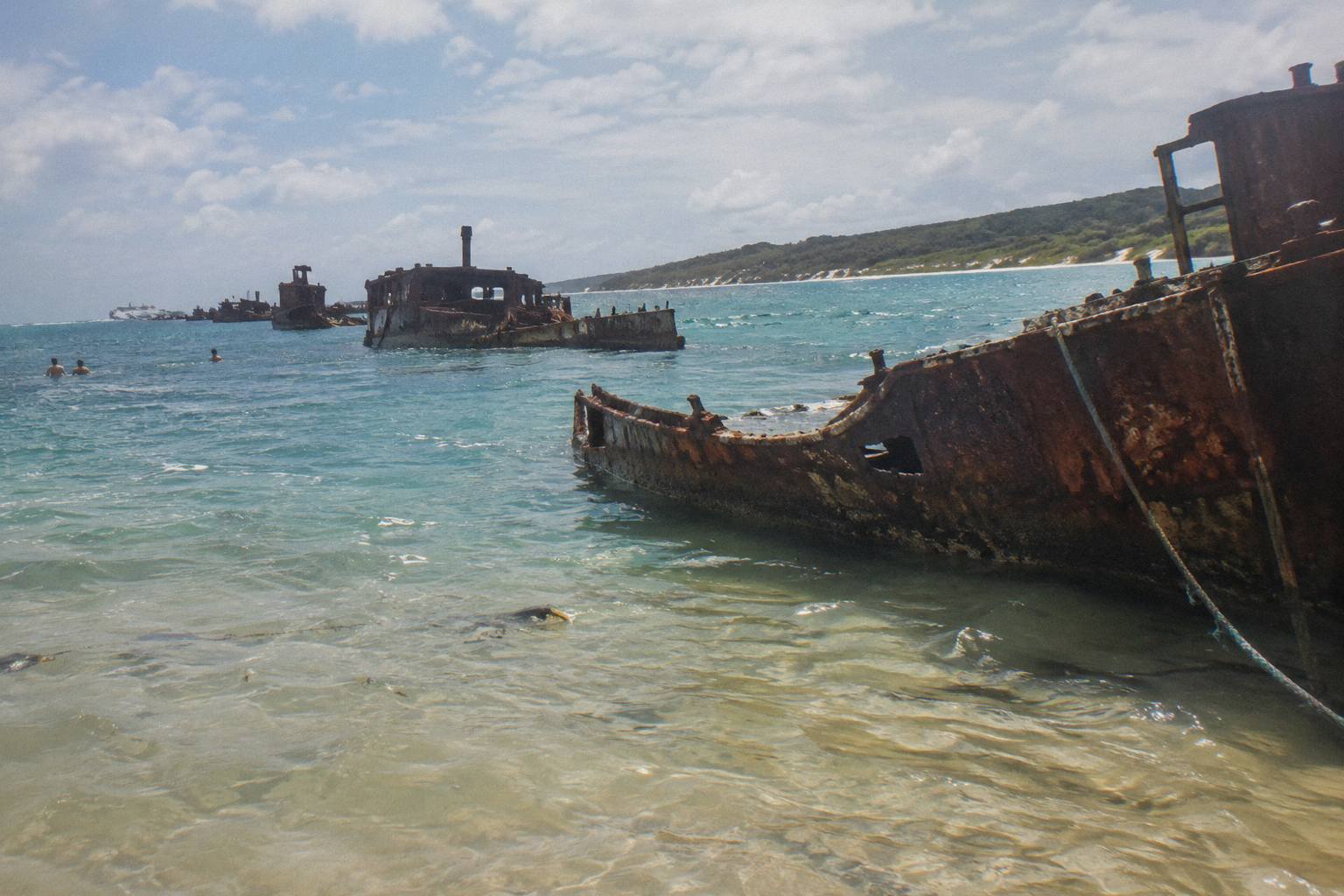
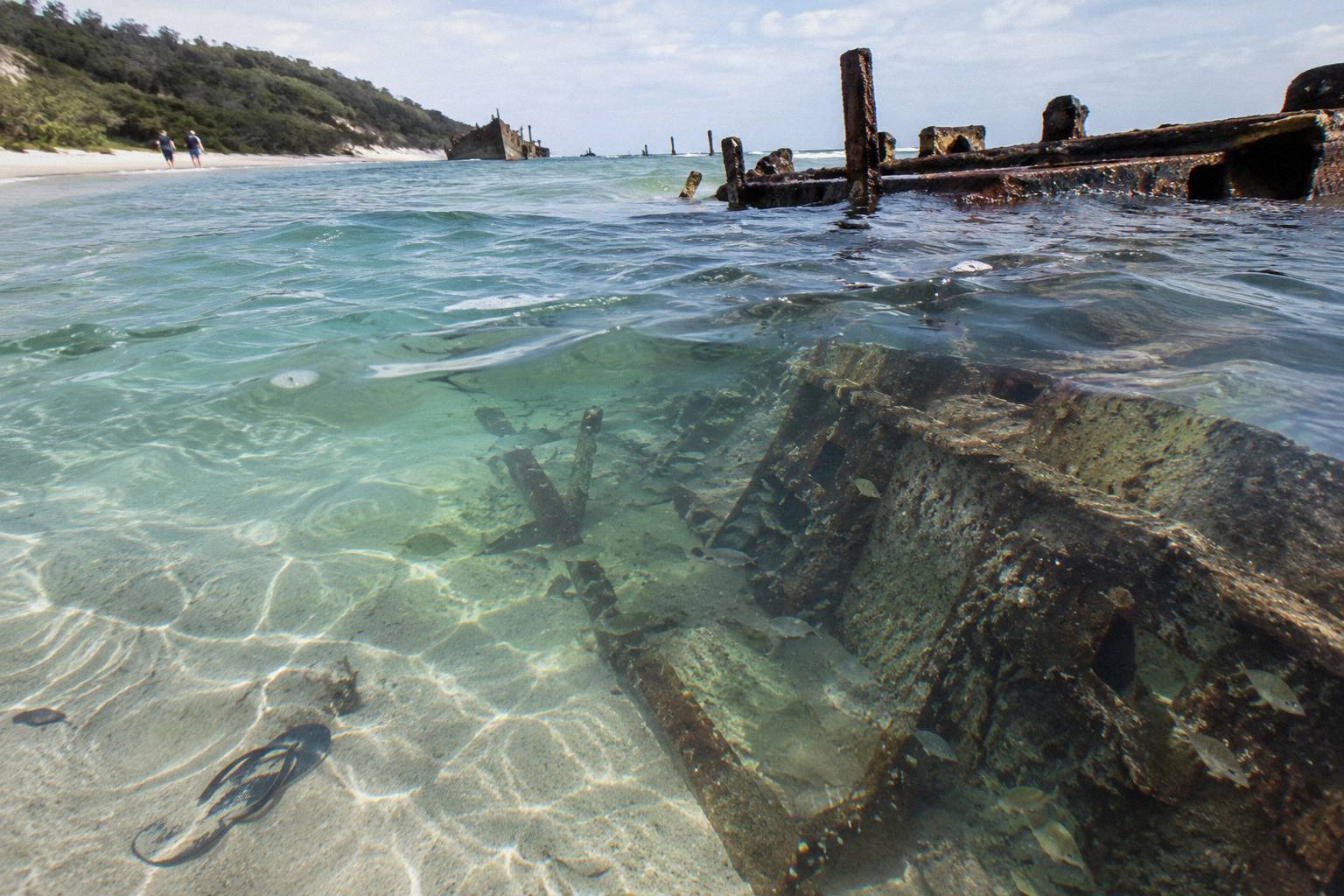
The Tangalooma Wrecks are fifteen vessels that were deliberately scuttled by the Queensland Government between 1963 and 1984 on the western side of Moreton Island. The boats were sunk to create a sheltered anchorage, giving recreational vessels a calm, protected place to anchor on the island's western shore. The Tangalooma Island Resort page, the primary source on the site, describes the cluster as ships placed "to provide safe anchorage spot for recreational boat owners". Five went down in 1963, five more in the 1970s and five in the 1980s. The oldest named vessel is the Maryborough, built in 1885. The wrecks sit just north of the resort, a 15 to 20 minute walk up the beach.
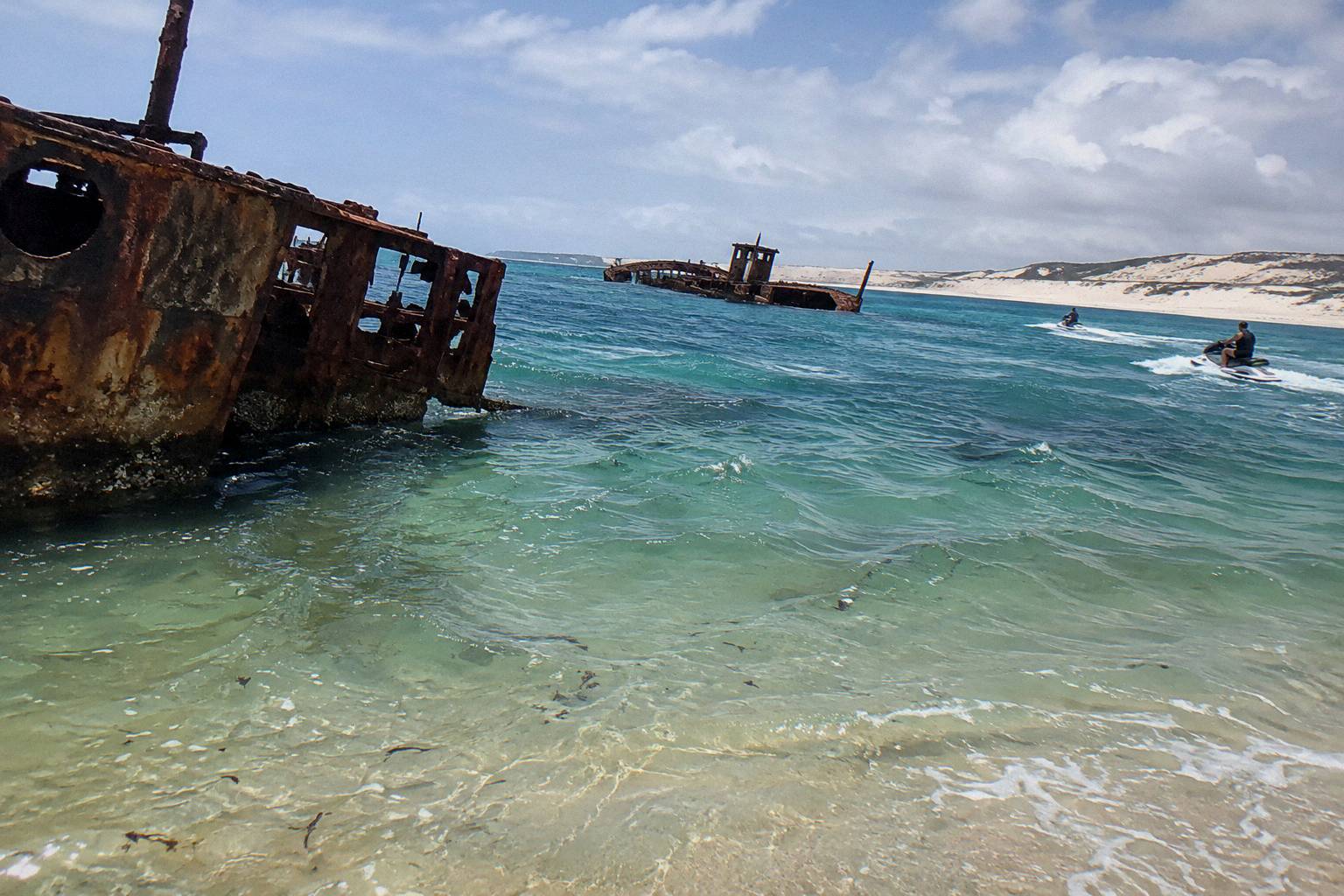
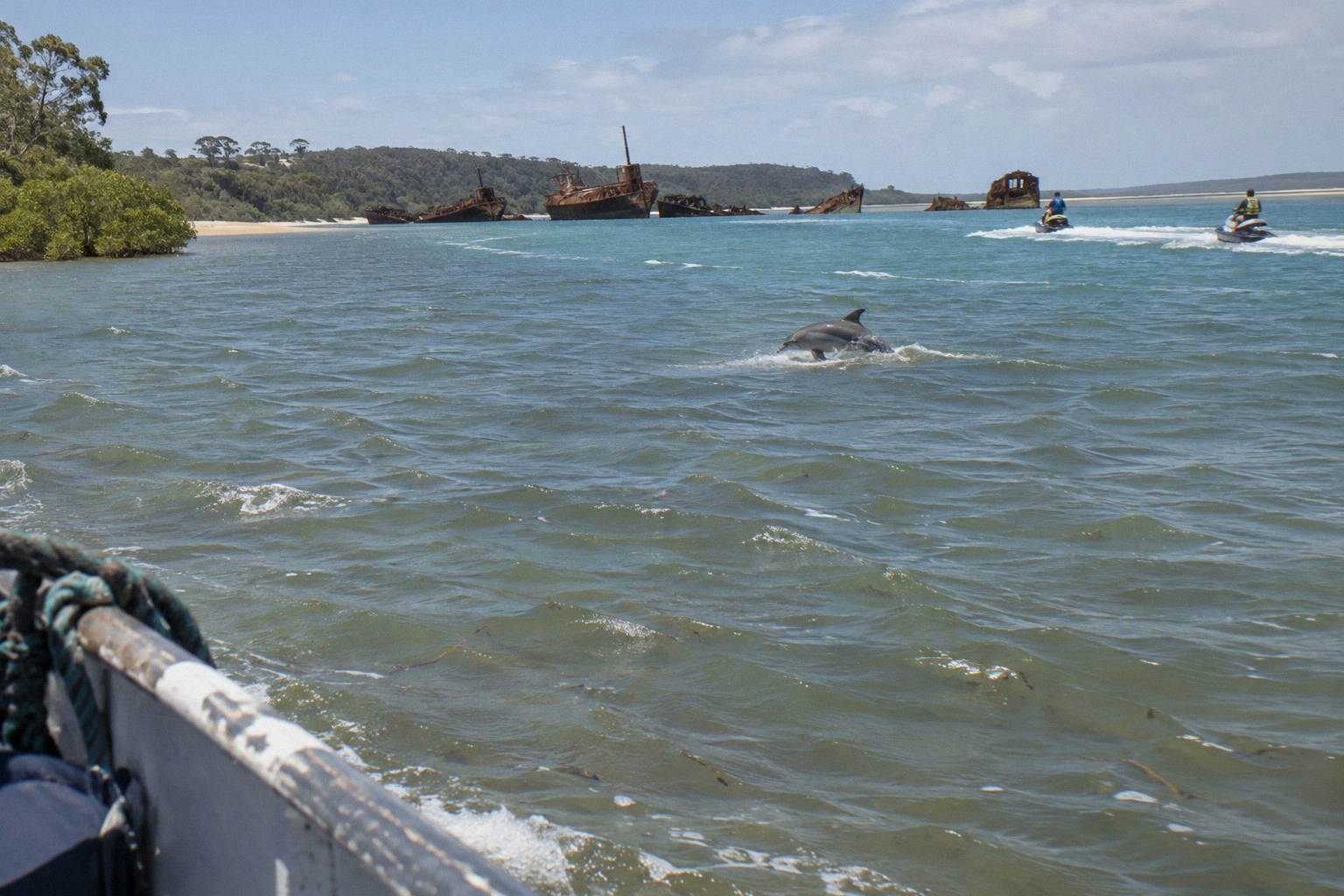
The named vessels, as credited on the resort's page, give a sense of the collection: UKI, Bream, Seal, Dolphin, Morwong, Kookaburra, Bermagui, Maryborough, Iceberg, Echeneis, Remora, Platypus II, Pelican, Groper and Stingaree. They were working ships and hulls of various ages, not naval relics, and their value today is as an artificial reef. The resort page says the site supports over 100 fish species, with coral "starting to form" on the structures, and that dolphins, wobbegongs and dugongs are sometimes present.
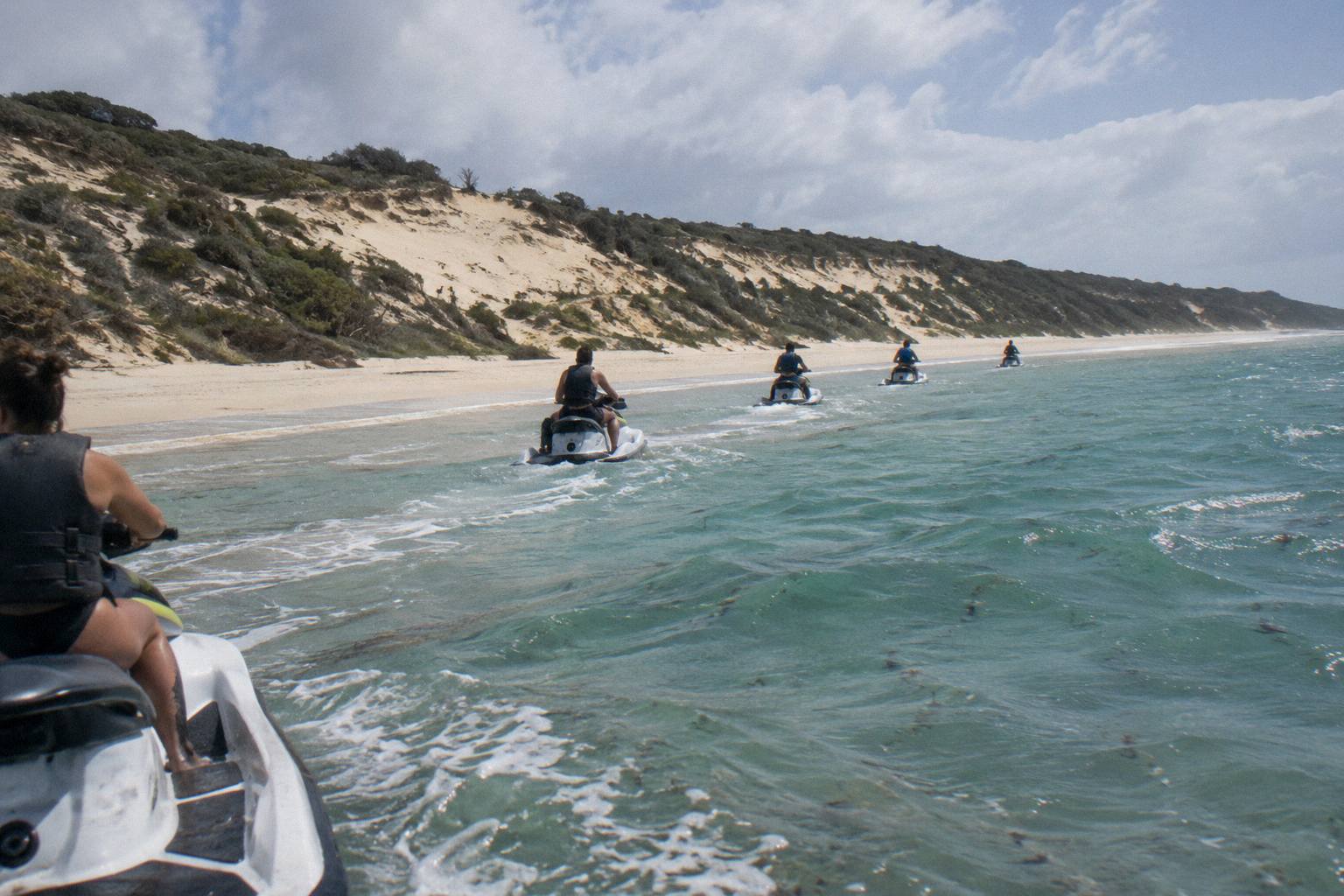
For anyone thinking about how to see them, one point matters more than any other on this page: no jet ski tour covered by this site stops at, or is sold as a visit to, the Tangalooma Wrecks. None of the guided routes the Brisbane operators list names the wrecks as a stop. Trident's own website does list a separate Gold Coast to Tangalooma tour, departing Sanctuary Cove Marina, running 8 to 10 hours and 230 km return at A$1,156 per ski with lunch included, but that is a direct booking with that operator, starts on the Gold Coast about an hour's drive from Brisbane, and is not among the tours covered here. For the Brisbane options that do reach Moreton Island waters, see the Moreton Island jet ski tour guide, and the broader picture is in the Moreton Bay jet ski rides overview.
| Fact | What The Official Page Says |
|---|---|
| Origin | Ships scuttled by the Queensland Government, 1963 to 1984 |
| Purpose | "To provide safe anchorage spot for recreational boat owners" |
| Number of vessels | 15 (five in 1963, five in the 1970s, five in the 1980s) |
| Oldest named vessel | The Maryborough, built 1885 |
| Marine life stated | Over 100 fish species; sometimes dolphins, wobbegongs and dugongs; coral "starting to form" |
| Location | Just north of the resort, a 15 to 20 minute walk up the beach |
| Safety notes on the page | Unpatrolled; strong current between wrecks and beach when the tide runs; many boats and jet skis pass between wrecks and beachfront |
What Is A Wobbegong And Should You Worry?
A wobbegong is a bottom-dwelling carpet shark found in Australian coastal waters, and it is one of the animals sometimes seen around the Tangalooma wrecks. As for worry, the Tangalooma page names the wobbegong as a possible sighting but says nothing about risk, so it gives no reason for concern. The resort's own text gives no description of the animal beyond listing it. For a plain-language definition, wobbegongs are a family of sharks with patterned, flattened bodies that rest on the seabed, and they are grouped with sharks in standard references. The page does not describe their behaviour at the wrecks and does not warn about them, so none of that can be added here as if the resort had said it.
This distinction matters because it is the only shark-related word on the entire official page. A reader who sees "wobbegongs" on a wrecks page and searches the name will quickly learn it is a type of shark. A reader who only skims might come away thinking the page promised a shark-free site. Neither reading is what the page says. It says the animal is sometimes present, full stop, in the same sentence as dolphins and dugongs.
Whether a wobbegong is something to worry about while swimming is not answered by any source in the facts for this page, and it will not be invented here. The honest framing is the one the resort gives: the wrecks are an unpatrolled site, the current between the wrecks and the beach is strong when the tide runs, and boat and jet ski traffic passes between the wrecks and the beachfront. Those three stated hazards are the ones a visitor can actually act on: swim within your ability, respect the tide, and keep clear of vessel traffic. Any question about marine life at the site should go to the resort or a tour operator, who can speak to current conditions.
A useful comparison sits in the state rules. Maritime Safety Queensland's personal watercraft rules require operators to slow to no more than 6 knots within 60 m of people in the water, anchored or moored boats, structures, boat ramps, jetties, pontoons, a bathing-reserve boundary or the shore, and to keep 30 m from any other moving ship or slow to under 10 knots. Those rules exist for traffic and proximity generally, not because of any animal. The relevance here is simple: the resort page's stated concern at the wrecks is vessel traffic, and the state rules treat people in the water near vessels as the situation needing speed limits.
What Do Official Sources Say About Wildlife In Moreton Bay?
Official Queensland Parks sources name humpback whales, grey nurse sharks, marine turtles and dolphins among the wildlife of Moreton Bay Marine Park. When it comes to safety, the park's official page focuses on go slow areas and on marine mammal approach distances rather than on shark risk. That is the entire official animal picture available. The parks wildlife page is a statement about the marine park as a whole, which covers a large sweep of bay and islands well beyond the wrecks, and it does not map any species onto any specific location. The park's visiting safely page states that "operating vessels (including jet skis) is largely unrestricted in the marine park", with the conditions that operators must follow go slow and no-anchoring areas and the marine mammal approach distances.
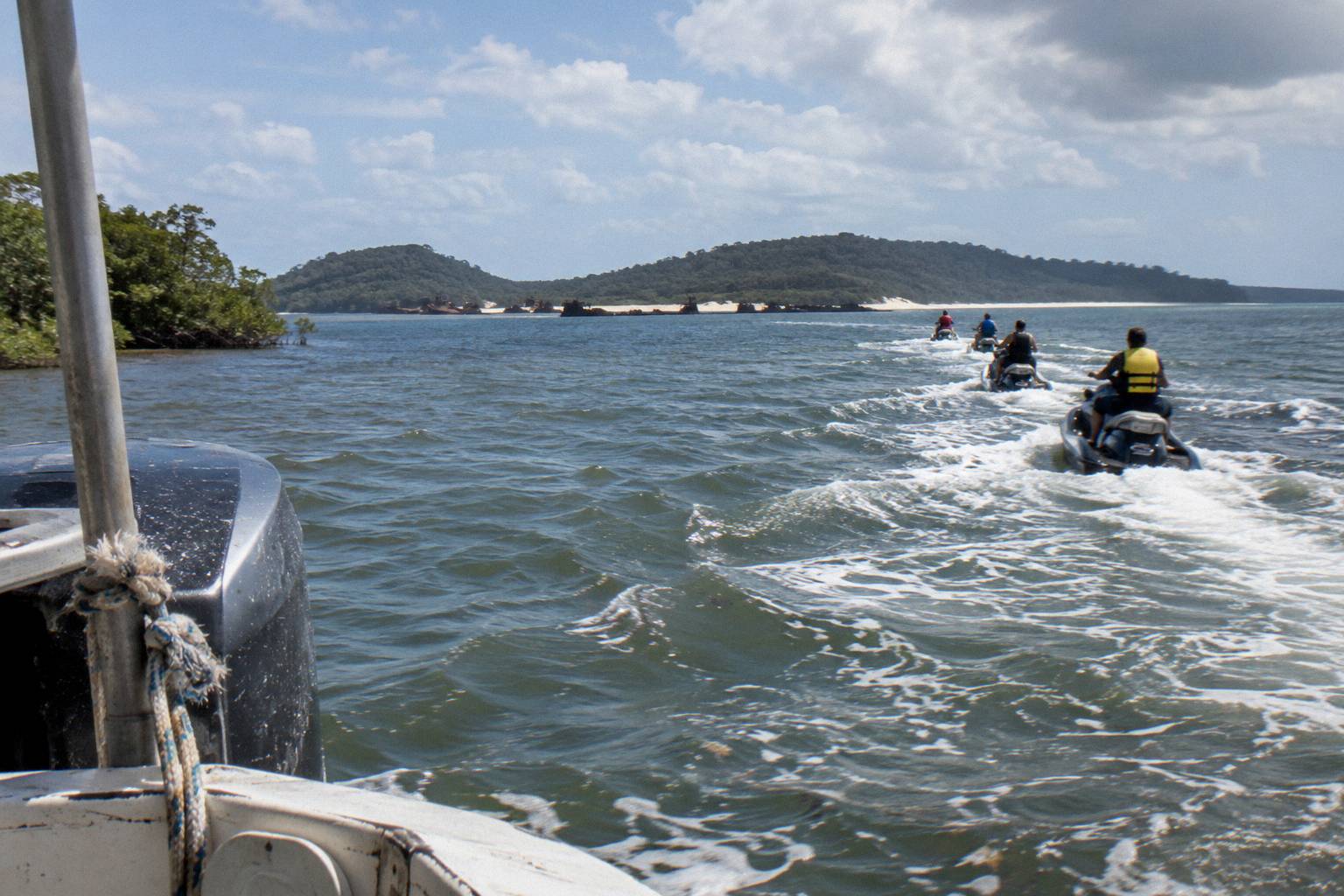
The go slow rules deserve a plain explanation, because they are the rules most likely to shape a jet ski day on the bay. In go slow areas, vessels must not navigate on the plane, meaning the craft cannot ride up on its hull at speed. For jet skis specifically, the parks page also bars "motorised water sports" in those areas: driving other than in a straight line, including circles, weaving, surfing or jumping wave and wash; towing a person; or not taking the most direct route between two places. Which areas are go slow areas, and how many exist, is not stated on the verified page, so no list appears here. The way to comply is to follow the operator's briefing on the day. The full index of guides sits on Brisbane Jet Ski Tours.
| Official Source | What It Says About Animals | What It Does Not Say |
|---|---|---|
| Tangalooma Wrecks page | Over 100 fish species; sometimes dolphins, wobbegongs and dugongs | No shark presence or absence statement; no risk rating |
| Queensland Parks wildlife page | Humpback whales, grey nurse sharks, marine turtles and dolphins are among the park's wildlife | No species mapped to the wrecks or any specific site |
| Queensland Parks visiting safely page | Go slow and no-anchoring areas and marine mammal approach distances apply | The specific jet ski mammal distances are not on the page |
| Maritime Safety Queensland | 6 knots within 60 m of people, boats, jetties and shore; 30 m from moving ships | No wildlife risk statements |
One more official line is worth knowing before any bay trip. The parks page gives a contact for stranded or injured marine animals: report through the QWildlife app or call 1300 130 372. Operators who run on the bay follow these park rules and the Maritime Safety Queensland personal watercraft rules, which also require a level 50 lifejacket in all water categories. For a fuller walkthrough of the rules side, see whether you need a licence to drive a jet ski in Queensland.
Is It Safe To Swim Or Snorkel At The Wrecks?
The official page's stated cautions are the unpatrolled beach, the strong current between the wrecks and the shore when the tide runs, and heavy boat and jet ski traffic passing between the wrecks and the beachfront; it publishes no shark or snorkel safety statement of any kind. Those three cautions are the complete set, and they are worth taking seriously on their own terms. An unpatrolled site means no lifeguards. A tidal current between the wrecks and the beach means the water moving through that gap can be demanding exactly where a swimmer would cross it. And vessel traffic in the same gap means swimmers and craft share a narrow corridor.
The resort page does offer one benign practical note: it says the best photos of the wrecks come at low tide and sunset. That is a photography observation, not a safety one, but the low tide mention lines up with the current warning in a way a visitor can use: the tide state changes the site, and checking the tide before planning a swim is basic preparation for any tidal water. No specific safety advice beyond the stated cautions appears in any source for this page, and none will be invented here.
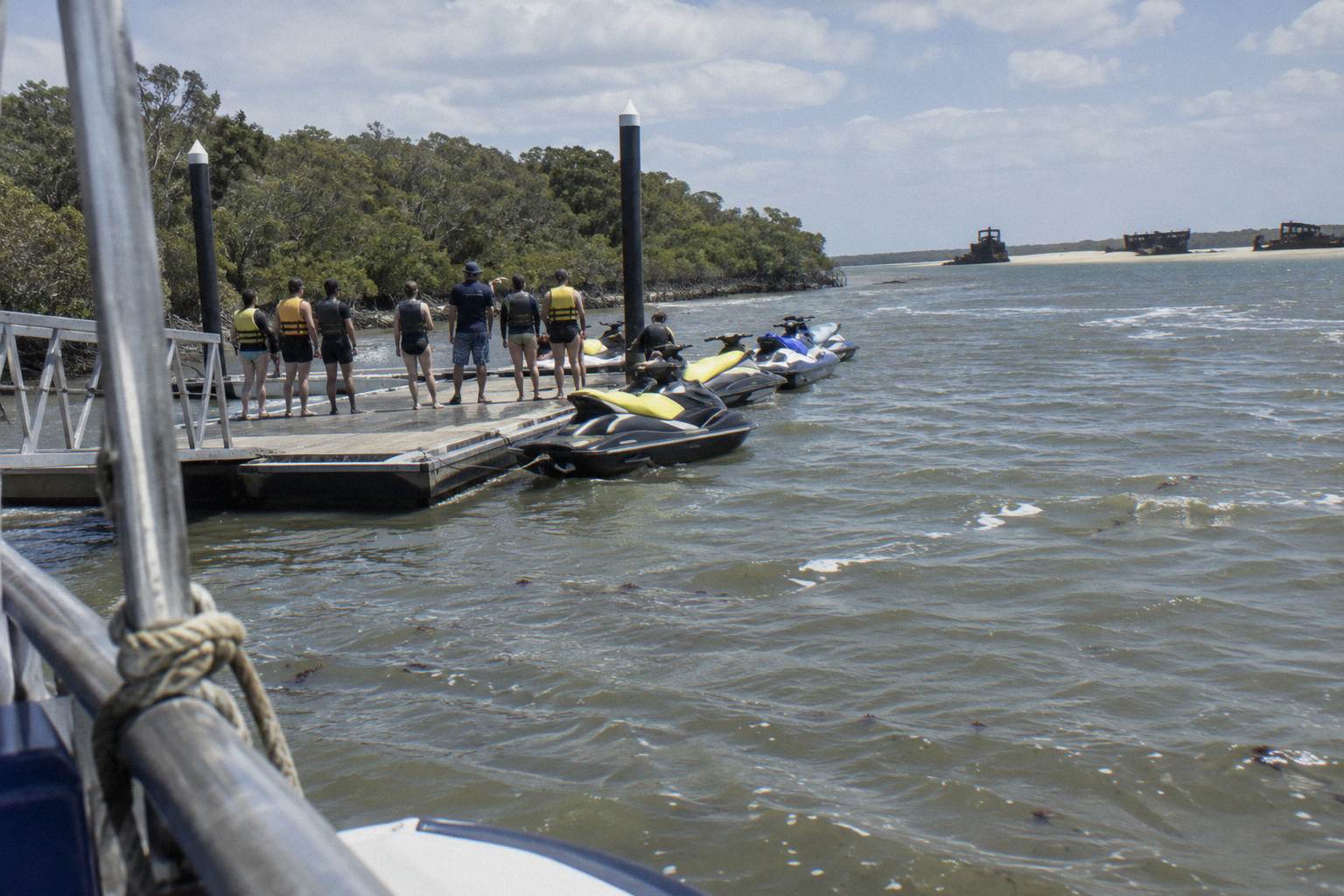
For jet ski riders the calculus is different from swimmers, because the rides covered here do not stop at the wrecks at all. A rider on a Brisbane jet ski tour is not deciding whether to swim at the site; they are on a guided run elsewhere in the bay or river. The safety picture that applies to them is the operator's briefing, the included lifejacket, the guide, and the state rules on speed and distance, all of which are covered in the jet ski safety on the Brisbane River and bay guide. If your actual worry is sharks in the river rather than at the wrecks, the question of whether there are sharks in the Brisbane River comes up on wet-ride pages too, and the answer there follows the same rule: nothing is published for a specific site, so ask the operator.
Which Jet Ski Tours From Brisbane Get Closest To The Wrecks?
No Brisbane jet ski tour visits the Tangalooma Wrecks, but two tours reach Moreton Island waters: the Poseidon South Moreton Island tour, 4 hours 30 minutes with lunch at the Gutter Bar included, and the Trident half-day, 5 hours from A$588 per ski with stops at St Helena Island and Peel Island and lunch at the Gutter Bar. The Poseidon tour runs from Newstead at 194 Breakfast Creek Rd, with drivers 16 and over and passengers 7 and over, a 200 kg combined weight limit per ski and 130 kg per person, free cancellation up to 24 hours before the start, and free tour photos. Its price is not stated; check the booking calendar. The Trident half-day departs Rivergate Marina in Murarrie at 8.00am October to March and 9.00am April to September, includes fuel, fees, guide, level 50 lifejacket, goggles and lunch, and carries up to 2 riders at 200 kg per ski. Trident recommends prior jet ski or motorbike experience on this one.
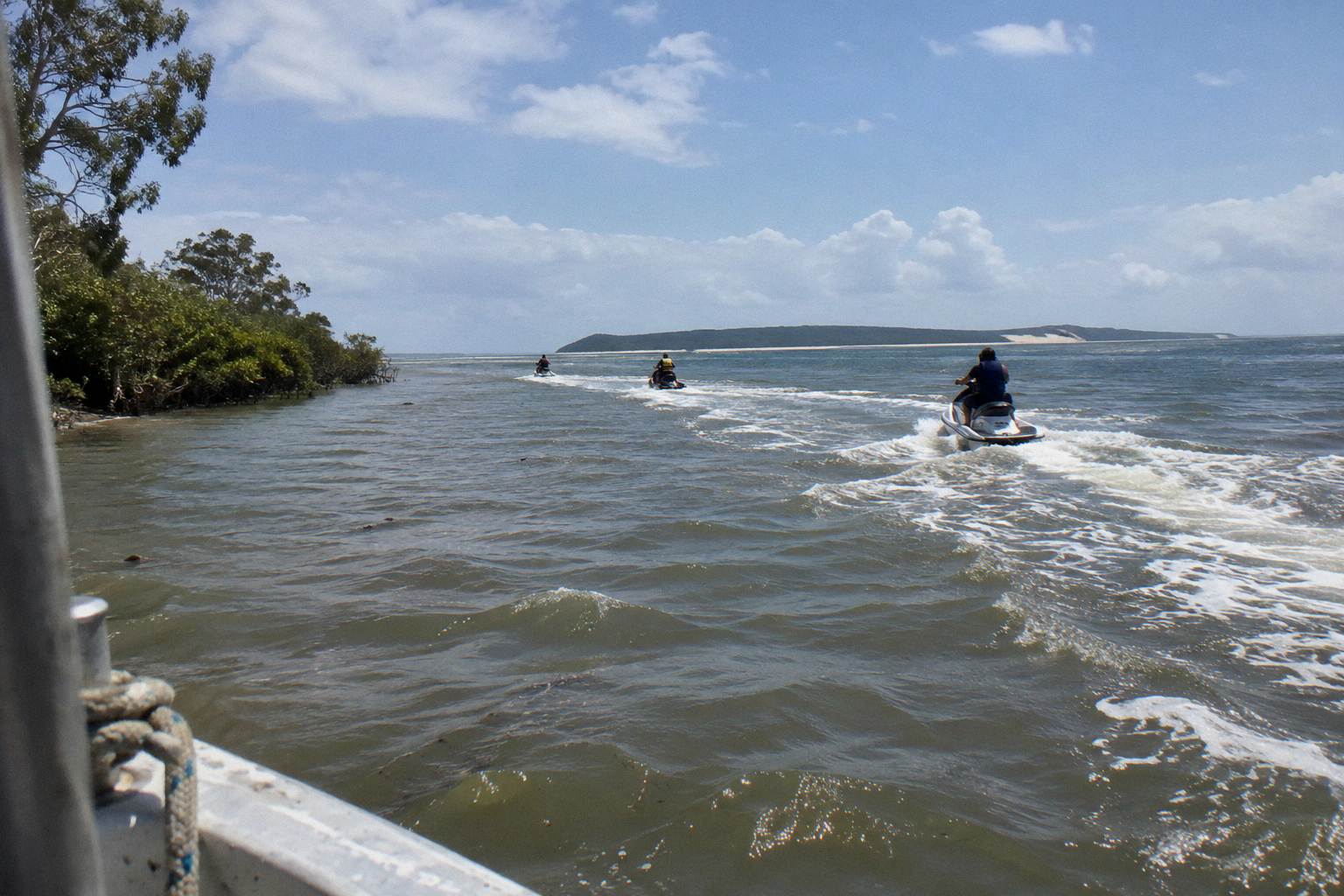
The Poseidon South Moreton Island Jet Ski Tour With Lunch is the featured pick for this article because the second rider is included free on the one ski. For a shorter bay run, the Jet Ski Tours Brisbane safari covers 2 hours 30 minutes from the City Botanic Gardens River Hub at 147 Alice St out to Moreton Bay, at the operator's RRP from A$199 per person twin share, with a 200 kg per ski limit and dry bags included; a solo rider pays the solo rate. If the whole family is deciding who can ride, the jet ski age limits in Queensland sets out each operator's stated ages.
Neither tour is a wrecks visit, and neither should be booked as one. What they offer is a guided day on the same bay the wrecks sit in, with a guide who follows the marine park rules and can speak to conditions on the day. Riders who want to see the wrecks themselves can walk to them from the resort beach, 15 to 20 minutes up the sand, and how you get to Moreton Island is a separate decision; the jet ski or ferry comparison for a Moreton Island day trip covers the trade-offs. Check availability if a guided bay day is the version of this trip that suits you.
For contrast, the shortest way onto the water from Brisbane is the Poseidon river tour, 70 minutes from the same Newstead meeting point, which stays on the river and does not enter the bay at all. The full range of options and prices is laid out in the jet ski prices in Brisbane guide.
What Trips People Up When Planning A Wrecks Trip?
The three mistakes that trip people up are booking a Brisbane jet ski tour and expecting it to include a wrecks stop, assuming the marine park's wildlife list actually describes the wrecks themselves, and treating the resort's animal line as if it were a real safety assessment. Each one sounds plausible, which is exactly why they catch so many planners out. Each of these errors comes from reading a real fact in the wrong frame, and each is easy to avoid once the sources are separated. A fourth follows close behind: planning a swim at an unpatrolled tidal site without checking the tide, after the page specifically warns about the current between the wrecks and the beach.
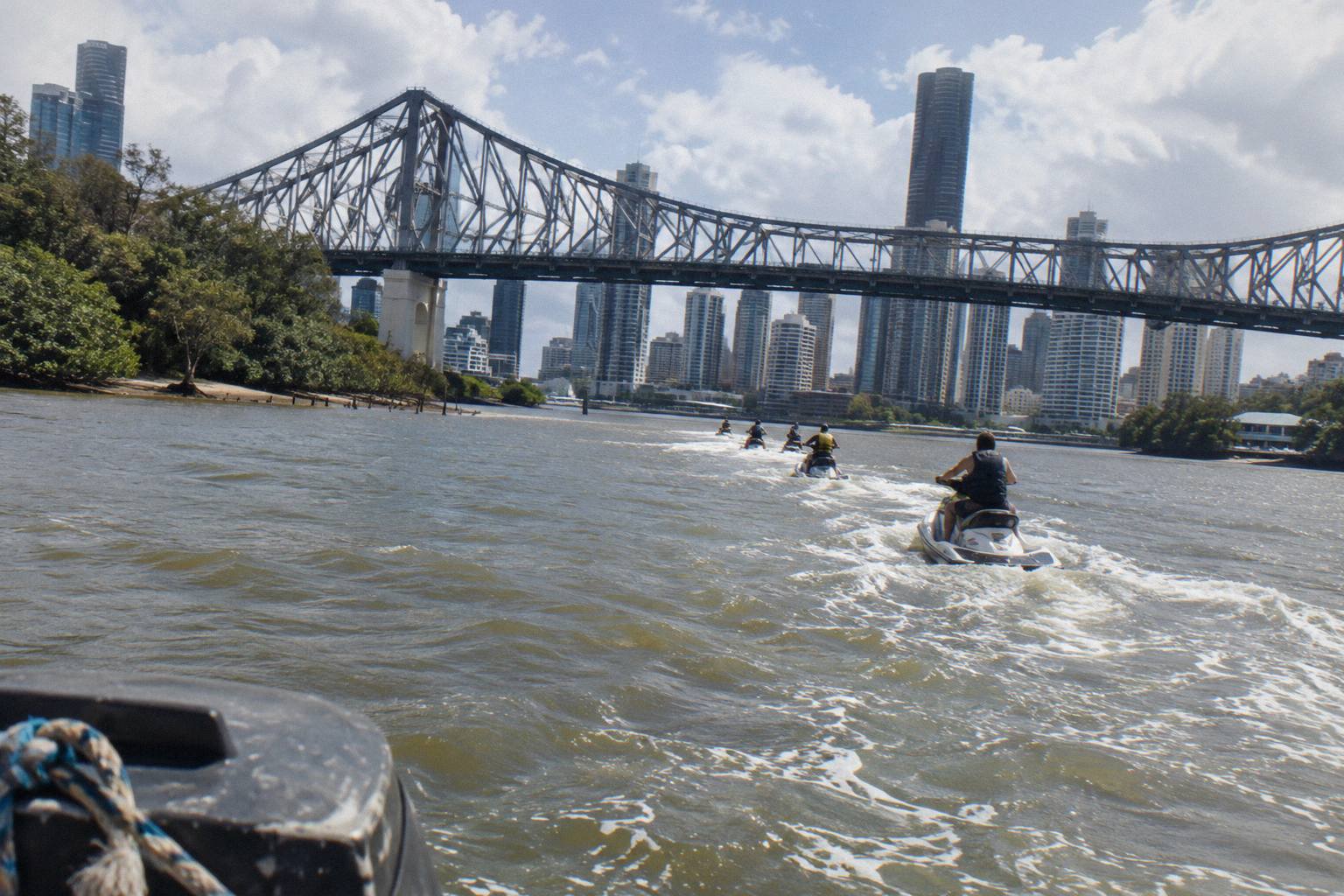
The first mistake is the expensive one. No tour covered here stops at the wrecks, and the operator pages do not list the wrecks as a route stop anywhere. A visitor who books the Poseidon South Moreton Island tour expecting to ride past the wrecks at speed has bought a different, still substantial day: a guided 4 hours 30 minutes on Moreton Island waters with lunch at the Gutter Bar. The second mistake overstates the official record. The grey nurse shark sits on a parks page about the whole marine park's wildlife, not about the wrecks, and moving a park-wide list onto one site invents a claim. The third mistake understates it in the other direction: "dolphins, wobbegongs and dugongs sometimes" is a wildlife note, not an all-clear.
The practical fix is simple and costs nothing. Decide first what you actually want from the wrecks: a swim and a walk from the resort beach, which is the resort's own described experience, or a guided jet ski day on the bay, which is what the Brisbane tours sell. If it is the swim, put the shark question and the current question directly to the resort, which runs the site, and treat its three stated cautions as the real planning inputs. If it is the ride, pick between the Moreton Island and river tours on duration, price basis and meeting point, and put your safety questions to the operator at booking, which is exactly what the jet ski tour weather and cancellation guide recommends for conditions generally.
A final planning note on honesty toward the official pages: the Tangalooma page credits the Maryborough, built 1885, as the oldest named vessel, and names the full fifteen. Details like that are the site's real story, a deliberate artificial reef built over two decades, and they hold up better in a trip plan than any secondhand shark rumour. The more you anchor the trip in what the official pages actually state, the fewer surprises the day holds.
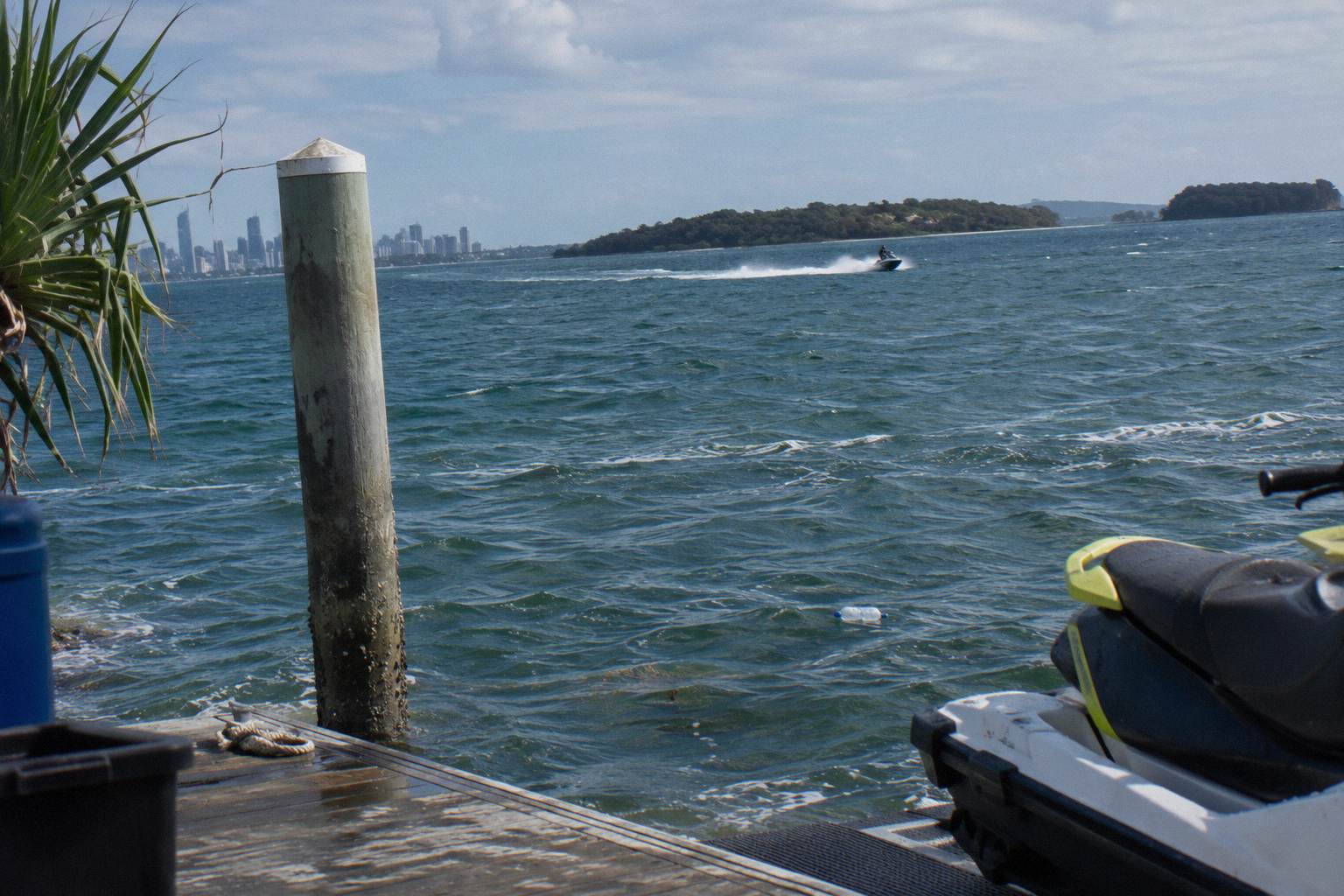
How Do The Bay Tour Options Compare?
The four Brisbane-side bay and island tours differ mainly in duration, price basis and launch point: a 1 hour bay experience is not offered from Brisbane, so the realistic ladder runs 70 minutes on the river, 2 hours in the bay, 2 hours 30 minutes to the bay from the CBD, 4 hours 30 minutes or 5 hours to the islands with lunch. The table below compares them on the facts each operator states, with prices printed only where an operator publishes one, always on its own basis.
| Tour | Duration | Operator's Price And Basis | Meets | Lunch |
|---|---|---|---|---|
| Poseidon Brisbane River tour | 70 minutes | Not stated; ask the operator | 194 Breakfast Creek Rd, Newstead | No |
| Poseidon Moreton Bay tour | 2 hours | Not stated; ask the operator | 194 Breakfast Creek Rd, Newstead | No |
| Jet Ski Tours Brisbane safari | 2 hours 30 minutes | RRP from A$199 per person, twin share; solo rate applies solo | City Botanic Gardens River Hub, 147 Alice St | No |
| Poseidon South Moreton Island tour | 4 hours 30 minutes | Not stated; ask the operator | 194 Breakfast Creek Rd, Newstead | Yes, at the Gutter Bar, included |
| Trident half-day to the Moreton Bay Islands | 5 hours | From A$588 per ski, up to 2 riders; a solo rider pays the full ski price | Rivergate Marina, 7 Rivergate Place, Murarrie | Yes, included |
The bases in that table are not interchangeable, and that is the single most common pricing trap. A$588 per ski with two riders is one ski shared; A$199 per person twin share is a per-person figure where a solo rider pays the higher solo rate. Never compare the raw numbers across those columns without carrying the basis with them. Poseidon publishes no price for any of its three tours, so no figure appears for them anywhere in this article; the booking calendar is where its prices live.
For a first-timer weighing the whole decision, the jet ski tours for beginners guide walks through what each operator includes and what experience it expects, and the question of whether a jet ski trip to Moreton Island is worth it works through the value case tour by tour.
Common Questions About Sharks At Tangalooma Wrecks
Are There Sharks At Tangalooma Wrecks?
No official source states or denies shark presence at the wrecks. The resort's page mentions over 100 fish species and sometimes dolphins, wobbegongs and dugongs; Queensland Parks names grey nurse sharks among the marine park's wildlife overall. Ask the resort or a tour operator about current conditions before swimming.
Is A Wobbegong A Shark?
Yes, wobbegongs are a family of bottom-dwelling carpet sharks in standard references, but the Tangalooma page only lists them as one of the animals sometimes seen at the wrecks and says nothing about behaviour or risk there.
Do Any Brisbane Jet Ski Tours Stop At The Tangalooma Wrecks?
No. None of the guided routes the Brisbane operators list names the wrecks, and no tour on this site is sold as a wrecks visit. Trident's own website lists a separate Gold Coast to Tangalooma tour, 8 to 10 hours from A$1,156 per ski, booked directly with that operator from the Gold Coast.
What Dangers Does The Official Wrecks Page Actually List?
The resort page says the site is unpatrolled, the current between the wrecks and the beach is strong when the tide runs, and a large number of boats and jet skis pass between the wrecks and the beachfront. It lists no other hazard.
Can You Walk To The Tangalooma Wrecks?
Yes. The resort page says the wrecks sit just north of the resort, a 15 to 20 minute walk up the beach.
Which Jet Ski Tour Gets Closest To Moreton Island?
The Poseidon South Moreton Island tour, 4 hours 30 minutes with lunch at the Gutter Bar included, and the Trident half-day, 5 hours from A$588 per ski with stops at St Helena Island and Peel Island. Both are guided bay days; neither visits the wrecks.